NATO has for the first time publicly released an updated list of baseline requirements for the resilience of Allied states against war and other large-scale threats. The document, 2026 Resilience Baseline Requirements, was published between 15 and 17 September and sets common benchmarks to help countries prepare for crises, withstand them and recover quickly.
The requirements are rooted in Article 3 of the Washington Treaty: each member state must maintain the capacity to resist armed attacks and other severe shocks. In NATO’s definition, resilience is the ability to prepare for shocks, withstand them, respond and recover rapidly so that society and the armed forces can continue to function.
The document covers seven areas:
Assured continuity of government and critical government services. Allies need tested plans for succession of authority, protected crisis centres, and the ability to take decisions and inform the public even in war or a major disaster.
Resilient energy supply. Countries must ensure reliable access to energy in a crisis, maintain backup arrangements and account for cascading effects if infrastructure is damaged.
Management of population movements. This includes mass evacuation, uncontrolled flows of people, and the need to keep civilian movements from interfering with NATO force deployments.
Resilient food and water supplies. Supplies must be protected against disruption, sabotage and prolonged shortages.
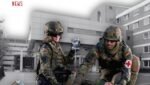
Preparedness of healthcare systems for mass casualties and major medical crises. Civilian health systems must be able to absorb the load, and stocks of medicines, equipment and blood must be sufficient and secure.
Resilient civil communications systems. Telecommunications and cyber networks must function in a crisis, with backup capacity, restoration options and priority access for national authorities.
Resilient transport systems. Allies must ensure both the rapid movement of NATO forces across Allied territory and the continued operation of civilian transport in a crisis.
NATO Secretary General Mark Rutte said individual Allied nations, and NATO, must be able to resist, respond to and quickly recover from shocks and disruptions. That, he said, is what resilience is all about.
The Alliance stresses a whole-of-society approach: military strength depends on the readiness of civilian systems — energy, food, water, healthcare, communications and transport. The updated requirements take account of growing hybrid attacks, sabotage of infrastructure, cyber threats and dependence on space-based systems.
For member states, the document is not a declaration but a framework for national plans, exercises and readiness assessments. NATO expects governments to formalise the roles of civilian and military structures, provide sustained funding and regularly test their plans in practice.