The European Union is preparing to tighten entry rules for Russian servicemen who took part in the war against Ukraine, fearing that their mass return to civilian life will create additional threats to European security. Over the years of the war, hundreds of thousands of people have passed through the Russian army, including former prisoners and members of security structures. Many of them gained experience handling weapons and explosives, and some were involved in war crimes. Brussels also fears that some former servicemen will be recruited by Russian special services for intelligence and sabotage activities or drawn into organized crime.
However, implementing such restrictions faces a serious problem. European authorities do not have full access to Russian military registries and cannot always establish an applicant’s real biography. Existing schemes for falsifying military documents in Russia, together with international networks that produce fake certificates, create conditions for a new market of services aimed at concealing participation in combat operations.
On 16 November 2026, after a meeting of the EU Foreign Affairs Council in Brussels, the EU’s top diplomat Kaja Kallas indicated that a ban on entry for Russian participants in combat operations could be included in the 22nd package of sanctions. According to her, information from Russian state registries and the capabilities of intelligence services could be used to identify such persons. The scale of potential restrictions is estimated in the millions. For example, the Estonian Ministry of the Interior has assessed that 1.5 million Russian citizens have taken part in combat operations on Russia’s side since February 2022. EU-wide restrictions are actively supported by Estonia, Poland, Lithuania and Sweden. At the same time, disagreements remain within the EU over the legal consequences of mass refusals, the additional burden on consulates, and the difficulties of identifying former servicemen. France and Italy previously voiced such concerns, although Paris’s position later became more favourable to strengthening this type of control.
In July 2026, when adopting the 21st sanctions package, the EU established the legal basis for restricting the entry of Russian participants in combat operations. However, applying such measures requires individual verification and sufficient legal grounds. According to a Euronews investigation of 6 November 2026, Ukraine transferred data on more than 500,000 Russian servicemen to European states, yet fewer than 1% of these names (fewer than 5,000 people) were entered into the Schengen Information System (SIS). Current rules do not allow entry to be automatically restricted solely on the basis of inclusion in a transferred list.
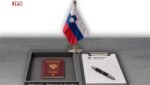
One measure discussed in the EU to strengthen control was a requirement that Russian men of conscription age present military identity documents (military tickets) when applying for visas. European officials fear, however, that the documents may be forged or contain unreliable information about military service. A military ticket also does not always make it possible to establish whether a person actually took part in combat operations, to which unit he belonged, or what tasks he performed. These concerns are well-founded: trading in fictitious military documents and altering military registration records already exists in Russia.
Such schemes became especially widespread after the announcement of partial mobilisation in Russia in autumn 2022, when offers to sell fake military tickets, medical certificates and changes to military registration data surged. Since the start of mobilisation, 79,000 advertisements appeared on Telegram offering services to cancel or prevent the delivery of mobilisation notices. Prices for these services ranged from 7,500 to 30,000 roubles, while individual services for producing fictitious documents reached hundreds of thousands of roubles. Unreliable information can also appear in genuine documents issued by state institutions. On 19 October 2022, Novaya Gazeta Europe described the case of St Petersburg resident Svyatoslav Khoroshev, whose military ticket was altered to change his military occupational specialty from radio-interception operator to rifleman and to add a note that he had undergone military training which, according to him, he never attended. Another mobilised man, Viktor Botvich, reported similar changes involving dozens of people. Thus, information in official Russian military documents may not correspond to the real biography of their holders. Detecting an unreliable entry in a genuine document is significantly harder than spotting an ordinary forgery, especially without access to primary military registration data.
Additional risks arise from international networks that produce fictitious documents. In December 2025, the French newspaper Le Monde published an investigation into the illegal acquisition of Romanian citizenship and identity documents by citizens of Russia, Moldova and other former Soviet countries. In November 2024, Romanian law-enforcement agencies carried out dozens of searches in a case involving the fictitious registration of nearly 10,000 people in a single locality. In 2025, a group was uncovered that had submitted more than 900 citizenship applications using forged documents. Since 2022, the authorities have identified around 2,000 suspicious fraud cases, with intermediary services costing between 4,000 and 7,000 euros.
In other words, a specialised market for fake military documents already exists to circumvent EU restrictions. It is capable of supplying Russians with fictitious biographical data and official certificates. Particular danger lies in possible assistance from Russian military institutions, since such capabilities are of interest to Russian special services seeking to ensure access for certain individuals to EU territory.
Serious differences remain among European states in their ability to identify Russian participants in the war. Entering a person in the SIS extends the relevant restrictions across the Schengen area, but it requires individual assessment. Without coordinated information exchange, a significant portion of data on Russian servicemen may remain outside European control systems.
Consequently, the effectiveness of the new restrictions will depend less on the scale of the ban than on the EU’s ability to reliably establish the military past of Russian citizens. Existing schemes for falsifying state documents show that verifying authenticity alone does not guarantee the identification of people concealing their participation in the war. Tightening visa requirements will increase demand for services that alter biographical data and create additional opportunities for organised criminal groups — and potentially for Russian special services. At the same time, the absence of a unified verification procedure and limited access to Russian military registries make it difficult to detect such schemes.
If European states fail to establish effective information exchange and verification of the military past of Russian citizens, the new restrictions will remain a formal security measure. Russian servicemen who participated in the aggression against Ukraine, the destruction of Ukrainian cities and violence against the civilian population should not be able to enter the European Union freely. For such persons, European borders should be closed, and any attempt to conceal participation in the war through fake documents or altered biographical data should become grounds for thorough verification and refusal of entry where appropriate legal grounds exist.