

On December 15, 2024, a major environmental disaster occurred in the Black Sea, near the Kerch Strait. During a severe storm, the Russian oil tanker Volgoneft-212 broke apart and sank. The vessel Volgoneft-239 also suffered critical damage and was washed ashore. Both tankers were carrying heavy fuel oil. These vessels, originally designed for operation on inland waterways and in coastal areas, had a relatively small deadweight and had been in service for more than fifty years at the time of the disaster.
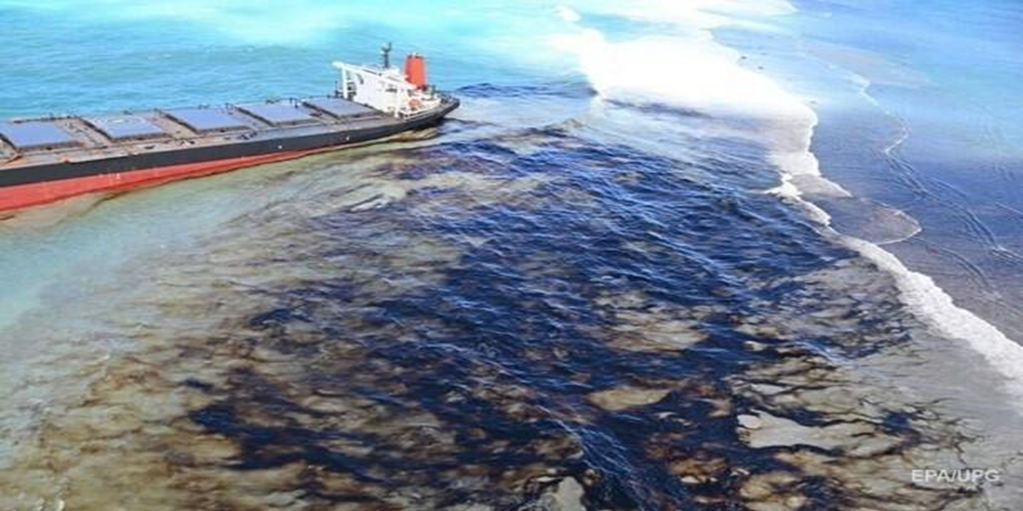
Given their age and design limitations, in the early 2000s, the tankers underwent a formal “modernization” and then continued to be used in maritime waters for which they were never intended. This decision was dictated by the shipowners’ desire to save money, as well as the virtual absence of effective control by Russian state authorities. A year after the accident, it became clear that the Russian authorities had no intention of identifying those truly responsible for the tragedy. No responsibility was assigned to port administration officials or representatives of relevant maritime authorities, who allowed ships of an inappropriate class to enter dangerous navigation areas and, guided by commercial interests, effectively prevented the tankers from returning to port when weather conditions deteriorated.
Formally, the classification body, the Russian Classification Society, formerly known as the Russian River Register, which issued certificates to tankers that raised serious doubts about their authenticity and objectivity, was also found to be “innocent.” Moreover, during subsequent court proceedings, representatives of port authorities claimed that the fact that the vessels had “river” rather than “sea” certificates allegedly exempted the port administration from the obligation to check their eligibility for sea navigation during the winter period. Such reasoning seems highly questionable from the point of view of generally accepted international maritime practice and safety standards.
The tragedy could have been even more devastating. At the same time, two other tankers of the same type, Volgoneft-109 and Volgoneft-270, were in the danger zone and only by chance did they escape the storm. Two days before the disaster, Volgoneft-212 and Volgoneft-239 were part of a convoy of about fifty ships off the coast of the Taman Peninsula. On the eve of the storm, the Kavkaz port traffic control service refused to allow the tankers to enter the port, limiting itself to instructing the convoy to seek shelter off the Crimean coast. However, there were not enough safe places there, and some of the ships, including the tankers that subsequently sank, were directed “further” to seek shelter.
Subsequently, all damages, with a clear underestimation of the actual scale, were attributed to the owners and shipowners of the tankers involved in the accident: Kamatransoil, Kama Shipping, and Volgatransneft. The captains were “designated” as the actual culprits in the sinking of the ships. Meanwhile, it turned out that both sunken tankers were heading for the storage vessel Firn (IMO 9224441), which at that time was flying the Panamanian flag. Five weeks before the disaster, this storage vessel had received cargo from more than thirty small tankers, including several Volgoneft-type vessels.
It was also established that the fuel oil transported by Volgoneft-212 and Volgoneft-239 belonged to one of Russia’s key corporations, Rosneft. The court documents indicated that the forced downtime of the tankers in stormy weather was increased, in part because Rosneft allegedly gave priority to unloading its own vessels. The order of approach and unloading was determined, in particular, by the charterer of the storage vessel Firn, taking into account the instructions of the cargo owner. Despite this, no property claims were made against Rosneft after the accident, although even in the absence of direct fault on the part of the charterer, in international practice, the costs of a “general average” are shared between the shipowner and the cargo owner.
The estimated losses of 85 billion rubles are disproportionate to the actual environmental damage caused, on the one hand, and on the other hand, they contrast with the Russian government’s statement that only about 10 billion rubles were spent on cleaning up the aftermath of the disaster. How much of these funds were actually used for their intended purpose remains an open question. It is also clear that neither Kamatransoil, Kama Shipping, nor Volgatransneft have funds comparable to the amount of damage announced. The insurers of the lost tankers were VSK and Absolut Insurance, with a combined insurance coverage limit of about 4 billion rubles for both vessels.
As early as January 2025, experts noted that the greatest man-made threat to the world’s oceans was posed by Russia’s oil tanker fleet, which was in critical technical condition. It was emphasized that the accident involving the tankers Volgoneft-212 and Volgoneft-239 near the Kerch Strait revealed a number of violations of environmental and international maritime regulations.
The ecological disaster was a direct consequence of systemic mismanagement in the Russian maritime industry. Its consequences continue to unfold and are long-term and largely irreversible. To date, it has not been determined how much fuel oil remains at the bottom of the Black Sea in the wreckage of the Volgoneft-212 and in the bow of the Volgoneft-239, although preliminary estimates suggest thousands of tons. Throughout the year, official Russian comments have been accompanied by systematic misinformation, understatement of the scale of the problem, and contradictory statements.
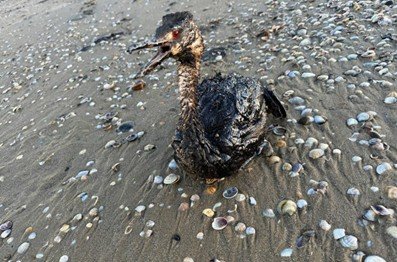
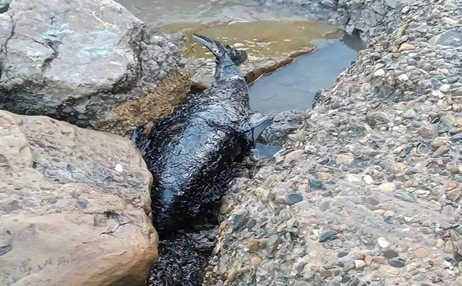
At the same time, environmentalists have already recorded the deaths of hundreds of thousands of birds and several thousand dolphins. It was noted that further negative impacts on ecosystems will develop gradually, but the closed nature of the Black Sea contributes to the accumulation and intensification of these impacts, which will affect all biodiversity in the region. Experts also warned of risks to the coasts of Bulgaria and Romania due to the nature of sea currents. During 2025, these predictions were fully confirmed.
The actions taken by the Russian authorities to deal with the aftermath of the accident stood in stark contrast to the events of November 2007, when a similar tanker, the Volgoneft-212, ran aground in the Kerch Strait and much of the coastal cleanup work was carried out by the Ukrainian side. A decade and a half later, with Russia now occupying Crimea, it became clear that Russia lacked not only modern technology for processing contaminated sand and fuel oil, but also specialized oil recovery vessels and equipment. In 2025, both in Crimea and in Kuban, the main “tool” for cleaning up the pollution was a regular shovel.
A year after work began on collecting fuel oil, high-ranking Russian officials continued to confuse the figures for the alleged amount of pollution collected and remained silent about where hundreds of thousands of tons of sand and pebbles mixed with oil products, as well as tens of thousands of dead animals, had been taken. In fact, this waste ended up in ordinary landfills in Crimea, Sevastopol, and the Krasnodar Territory.
The “final fuel oil disposal plan” announced in March 2025 for the sunken tanker fragments did not end well either. The plan involved cutting off protruding structures, installing cofferdams to create a sealed space, heating and pumping out fuel oil, and then dismantling protective structures and ship remains. Particular attention was drawn to a statement by Deputy Prime Minister Vitaly Savelyev, who, speaking about the installation of cofferdams “before the autumn storms,” said that “next year, upon receiving the technology,” the authorities would only attempt to raise all three sunken parts. In the fall and winter of 2025, Russian sources claimed that “one cofferdam has already been installed” and work on the other two is continuing. However, by December 2025, it became clear that there were no effective protective structures over the wreckage of the Volgoneft-212 and the bow of the Volgoneft-239. With the onset of seasonal storms, fuel oil began to appear en masse on the shores of Crimea and Kuban again.
The Russian authorities’ response was limited to publishing formal reports and attempting to intimidate the local population in order to prevent the spread of photos and videos showing the polluted coastline on social media. At the same time, rumors spread that “the first cofferdam was damaged by a storm” and “the second one did not fit.”
The international response to the disaster was rather restrained. The Danube Commission was the most active organization, taking certain measures after repeated statements by the Ukrainian delegation. Experts pointed out that Russia intends to extend the operation of up to 80 surviving Volgoneft-type tankers for the needs of its shadow oil fleet, of which at least 15-20 will be used in the Azov and Black Seas, creating extreme risks for shipping and the environment. In December 2025, this was reflected in a resolution on the Register of Damage Caused by Russian Aggression to the Lower Danube.
The letter from the International Maritime Organization expressed concern about this issue, and a similar opinion was supported by the Inland Transport Committee of the United Nations Economic Commission for Europe. The Committee Secretariat stated that it was aware of the seriousness of the accident and its consequences for the marine environment, expressing its condolences to those affected and its hope that the results of the investigations would serve as an incentive to improve shipping safety. However, no practical changes have been made over the past year.
The relevant division of the European Commission mentioned the disaster in the context of measures against the Russian shadow fleet and the circumvention of sanctions. Other international bodies touched on this topic only indirectly in 2025, for example in the report of the UN Special Rapporteur on toxic substances and human rights. Despite experts’ calls to include tanker owners, insurers, and Russian classification societies in the sanctions lists, only Canada imposed sanctions against Kama Shipping and Volgatransneft during the year. The Russian Classification Society was not subject to sanctions, and no bans on Volgoneft-type tankers entering ports were introduced.
Only the storage vessel Firn fell under EU and UK sanctions. Renamed Grus I and flying the Cameroon flag, it continues to transport oil products from Novorossiysk to India. Outside Ukraine, the media largely ignored the disaster. The disaster remained outside the attention of most media outlets, except for Ukrainian ones. Polish media only remembered it in the fall of 2025, after Foreign Minister Radosław Sikorski said that “shadow” tankers in the Baltic Sea were a serious environmental threat, as well as some Romanian media and a BBC review on the anniversary of the tragedy.
Given the critical technical condition of Volgoneft-type tankers, it is only a matter of time before the next accident occurs. Areas of increased risk include not only the Baltic, Black, Azov, Caspian, and Danube seas, but also inland waterways such as the Volga, Don, and Neva rivers, from where the consequences of accidents could spread to international waters.
Volgoneft tankers comprise vessels of five designs: 550, 558, 550A, 1577, and 630, built between 1963 and 1996 in Volgograd and at Bulgarian shipyards in Ruse and Varna. They became the most mass-produced series of small tankers in the USSR, designed to transport oil and petroleum products along river systems. Despite their small tonnage, these vessels played a strategic role in the Soviet oil system. Initially, they belonged to the inland navigation class and were supervised by the Russian River Register and then its successor.
Since the 1990s, Russia has not invested in upgrading this fleet, which has led to the current situation. Despite this, state-owned oil companies continue to spend billions of dollars on transportation using these vessels. Since 2000, in addition to the accidents in 2007 and 2024, there have been numerous incidents involving Volgoneft tankers, often only by sheer luck not resulting in major oil spills.
By 2025, out of 207 ships of various designs that were built, more than a hundred were actually in operation, most of which still belong to Russian beneficiaries and fly the Russian flag. A significant portion of them are used as floating storage facilities or river tankers, as replacing their main engines is economically unviable. At the same time, Project 630 vessels are actively used in Russia’s shadow fleet, including for transportation in the Black Sea, the Sea of Azov, the Caspian Sea, and even in Arctic waters, which creates additional environmental risks.
Particular attention should be paid to the activities of operators and ship managers such as Donnefteatrans, which is linked to offshore structures in the Seychelles and Marshall Islands and claims to have “strong ties” with the Russian Maritime Register of Shipping and federal authorities. It is through such companies that worn-out ships are operated in formal compliance with safety requirements and crews are hired at low wages.
Thus, the remnants of the Soviet “river empire” of Volgoneft tankers continue to pose a serious threat to the environment and maritime infrastructure of the Arctic, Caspian, Baltic, Azov, Black, and Mediterranean Seas. Although these vessels are overshadowed by the larger tankers of Russia’s shadow fleet, the risks of their operation are clearly confirmed by the facts. This problem must be addressed at the level of the International Maritime Organization, the UN Economic Commission for Europe, and other international bodies. Volgoneft-class vessels should be denied passage through the Black Sea and Baltic straits, as well as entry into ports; their owners, operators, and classification societies should be subject to sanctions, and monitoring and independent assessment of the damage from the December 2024 disaster should become the subject of systematic work by international organizations, including the International Maritime Organization, the Black Sea and Danube Commissions, the Organization of the Black Sea Economic Cooperation, UN structures, and the OSCE.